
Institutions and development stakeholders
Structure policies, programmes and projects around the needs of territories and value chains.
- Studies and territorial assessments
- Programme design and monitoring
- Stakeholder dialogue and decision support
Five complementary practice areas: institutions, businesses, training, certification and data.

Informing public decision-making, strengthening the effectiveness of interventions and accelerating the transformation of agri-food systems.

Reconciling economic performance, climate resilience, environmental responsibility and social inclusion.
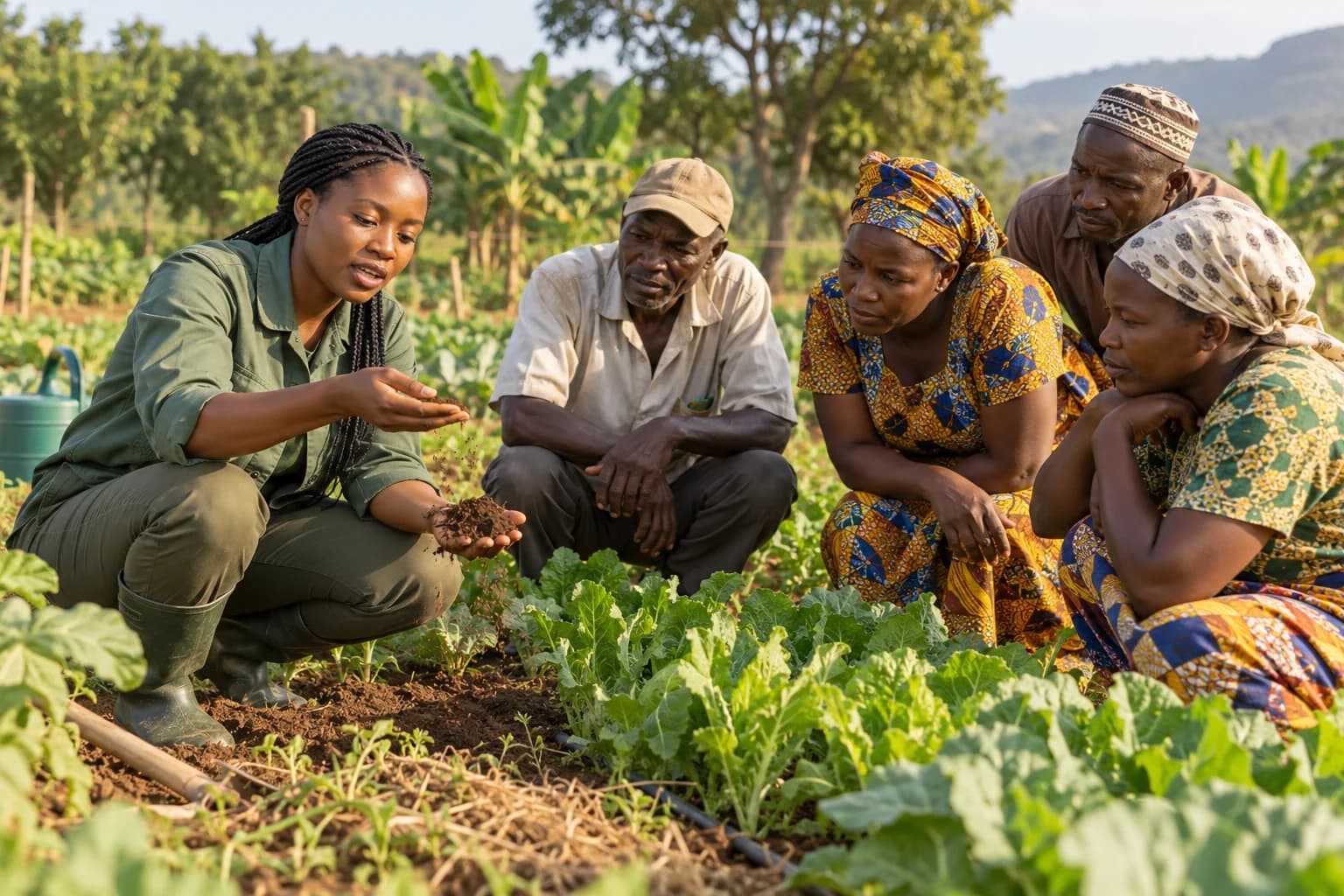
Developing the skills and learning systems that accelerate the adoption of agroecological practices.

Preparing, structuring and improving your management systems all the way to the certification audit.
Using data and modelling to plan, anticipate risks and decide with confidence.
Different roles bring different challenges. Our work connects strategic decisions with the realities of agrifood systems.
Structure policies, programmes and projects around the needs of territories and value chains.
Improve practices, understand risks and build viable agricultural projects.
Develop practical skills with learning tailored to the role and context.
The format depends on your needs, available resources and the level of support required.
Build a shared understanding of the situation before making a decision.
Translate a strategic direction into a path towards implementation.
Build the capacity teams need to apply solutions.
A few pointers to prepare an initial conversation and clarify your needs.
When developing an idea, commissioning an assessment or working on an existing project. An initial discussion helps identify whether you need strategic guidance, problem-solving, skills development or support for a new phase.
A project may bring together consulting, training, data and compliance. Its scope can combine several areas of expertise according to the objectives and skills required.
Depending on the project: an assessment, recommendations, a roadmap, monitoring tools, training materials or audit preparation documentation. Deliverables and validation criteria should be agreed during scoping.
Scoping considers objectives, location, available data, depth of analysis and expected deliverables. Describing these factors helps establish an appropriate scope, timeline and proposal.