All practice areas

Practice area

Institutions & Development Actors

Informing public decision-making, strengthening the effectiveness of interventions and accelerating the transformation of agri-food systems.

Who it is for

  • Governments
  • Ministries
  • Public agencies
  • International organisations
  • NGOs
  • Technical and financial partners
  • Research centres
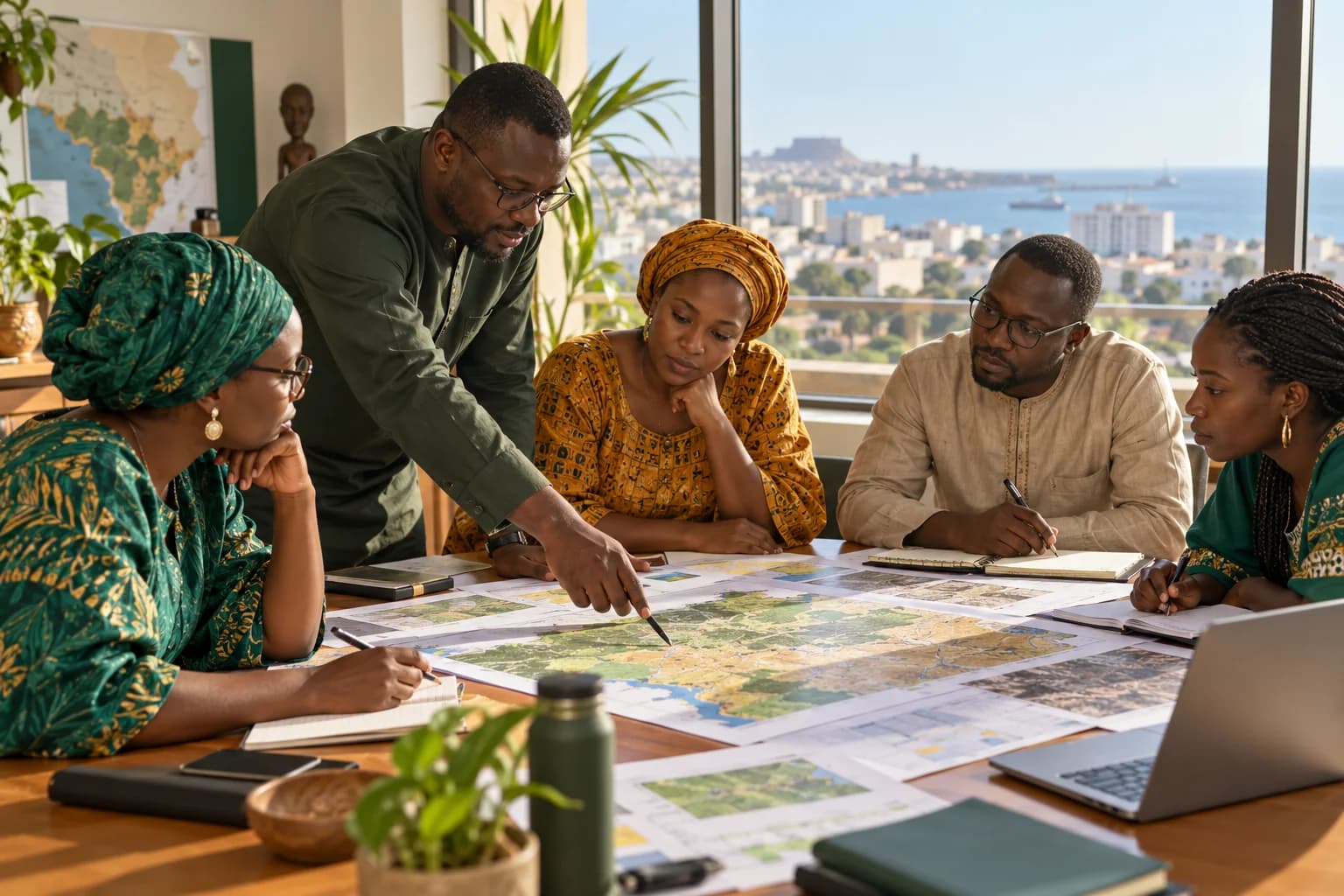
Agricultural development professionals discussing maps

Purpose of this practice

CEADSA supports public institutions, technical and financial partners, development organisations and research centres in designing, piloting, implementing, evaluating and scaling up agroecological and climate transition policies, strategies and programmes.

Our approach rests on a systems view that integrates agriculture, climate, biodiversity, food security, social inclusion, territorial development and economic resilience.

What we actually do

Strategic studies, applied research & foresight

Producing and mobilising scientific and operational knowledge to inform public decisions and guide investment.

  • Co-design of research protocols in agroecology, sustainable and climate-smart agriculture
  • Participatory action research with producers and local stakeholders
  • Technical assistance in designing and implementing research programmes
  • Policy briefs, technical studies, reports and scientific papers
  • Foresight studies, transition scenarios and impact modelling
  • Analysis of opportunities to include women and young people
Project design, management & implementation

Supporting the full life cycle of agroecological, climate and food transition projects and programmes.

  • Formulation of multi-stakeholder projects and programmes
  • Logical frameworks, theories of change and results matrices
  • Monitoring, evaluation, learning and knowledge management systems
  • Technical coordination of complex projects and facilitation of multi-stakeholder platforms
  • Living Labs and territorial pilot projects
  • Replication and scaling-up strategies

Value chains & sustainable agri-food ecosystems

Making value chains more inclusive, resilient, competitive and climate-smart.

  • Mapping of actors, flows and relationships within value chains
  • Diagnosis of agricultural and agri-food value chains
  • Economic inclusion of smallholders, women and young people
  • Inclusive and climate-smart business models
  • Nature-based solutions and circular economy
  • Structuring of territorial agri-food ecosystems

What the project can provide

These are possible deliverables to be agreed according to your project’s scope and objectives.

Territorial or sector assessment

Assess resources, constraints, needs and opportunities using available information and stakeholder input.

Stakeholder mapping

Identify roles, interactions and coordination needs relevant to project governance.

Strategic framework and action plan

Bring objectives, priorities, actions and implementation arrangements into a coherent pathway.

Monitoring framework

Define indicators, information sources and data collection arrangements to track programme progress.

From the first conversation to project scoping

Collaboration starts with shared needs and an explicit scope.

Understand the request

Identify objectives, context, stakeholders and open questions.

Define the scope

Clarify activities, deliverables, working arrangements and resources.

Build a proposal

Agree on an approach, timeline and validation criteria before starting.

Scoping this expertise

Discuss your needs
How can local stakeholders be involved?

The project can include interviews, workshops and feedback sessions. Participants and engagement arrangements depend on the context and objectives.

What data should we prepare?

Strategies, existing studies, territorial data and stakeholder information provide a starting point. Scoping identifies any additional information needed.

Let’s discuss your needs

Share your context with us: we will propose a tailored approach, from study to implementation.