All practice areas

Practice area

Training, Capacity Building & Learning

Developing the skills and learning systems that accelerate the adoption of agroecological practices.

Who it is for

  • Decision-makers
  • Public officials
  • Technicians
  • Agricultural advisers
  • Producers
  • Entrepreneurs
  • Businesses
  • Professional organisations
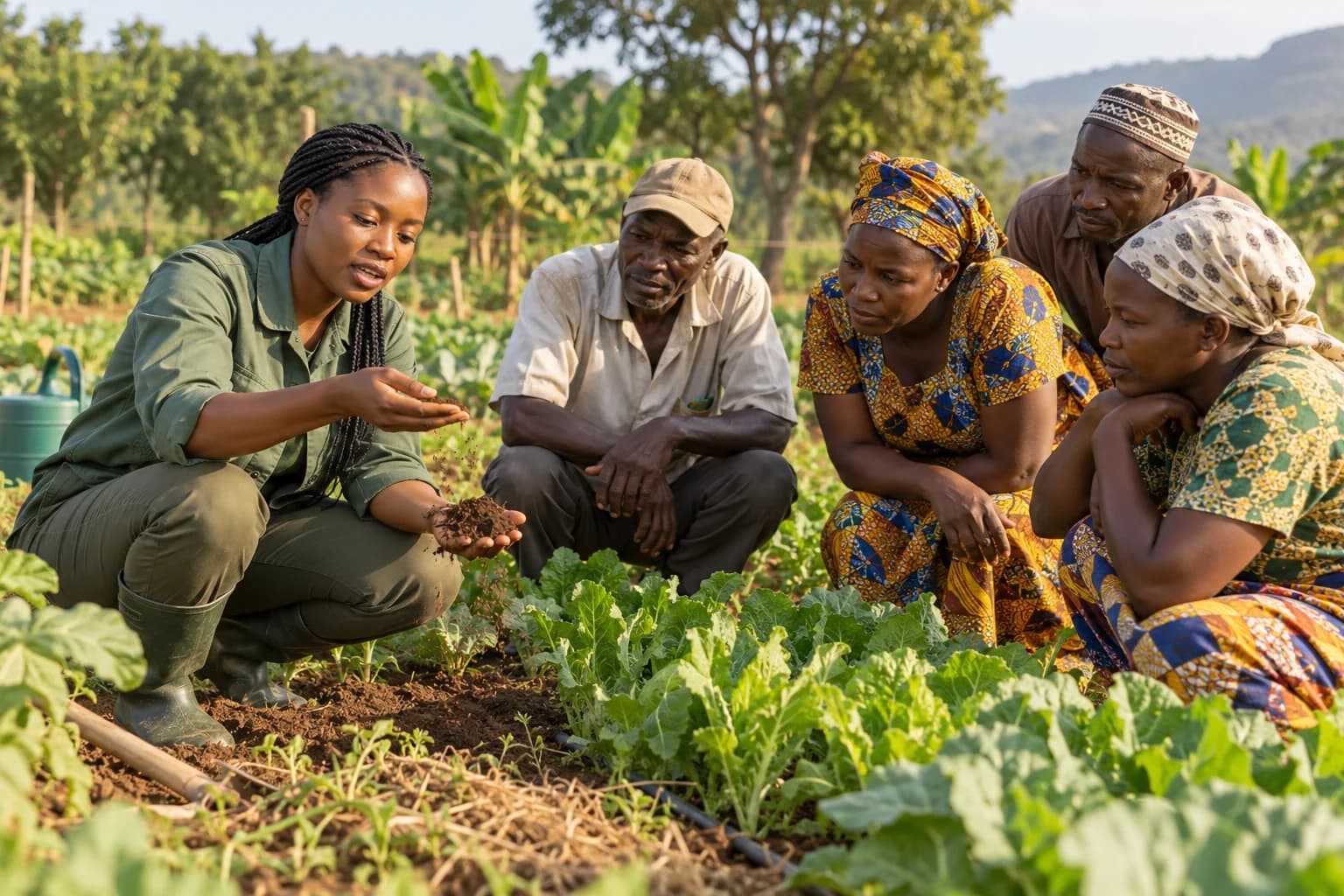
Training women farmers in climate-smart innovations in a field

Purpose of this practice

Our training combines scientific input, practical application, participatory learning and implementation support.

What we actually do

Strategic training for decision-makers & institutions

  • Sustainable agricultural policies and agroecological transition
  • Climate, biodiversity and food security strategies
  • Multi-stakeholder governance and coordination of interventions
  • International sustainability frameworks and performance standards

Technical training in agroecology & sustainable farming systems

  • Principles and practices of agroecology, climate-smart and regenerative agriculture
  • Sustainable management of soil, water and fertility
  • Agroecological farm diagnosis and agricultural planning
  • Adapting production systems to climate risks

Participatory learning, innovation & knowledge sharing

  • Design of programmes, learning pathways and training materials
  • Farmer Field Schools (FFS) and communities of practice
  • Seminars, masterclasses, technical workshops and thematic schools
  • Capitalisation and dissemination of good practices and innovations

What the project can provide

These are possible deliverables to be agreed according to your project’s scope and objectives.

Training needs assessment

Identify participants, skills to develop and professional situations the training needs to address.

Learning programme

Adapt learning objectives, sessions, exercises and delivery methods to participants.

Practical materials and tools

Provide worksheets, case exercises and working tools to help apply the knowledge.

Learning review

Use assessment findings and consolidation suggestions to identify progress and further needs.

From the first conversation to project scoping

Collaboration starts with shared needs and an explicit scope.

Understand the request

Identify objectives, context, stakeholders and open questions.

Define the scope

Clarify activities, deliverables, working arrangements and resources.

Build a proposal

Agree on an approach, timeline and validation criteria before starting.

Scoping this expertise

Discuss your needs
Can training be adapted to our team?

Participants, objectives and working situations inform scoping. They guide content, technical depth and suitable exercises.

Can learning include practical application?

Depending on the topic and project conditions, the programme can include exercises, case scenarios or field sessions.

Let’s discuss your needs

Share your context with us: we will propose a tailored approach, from study to implementation.